
Destinations Travel, Vietnam Travel Guides
Huyen Khong Pagoda Hue: History, Visiting Guide & Travel Tips
Aug
Nestled amidst the serene landscapes of Hue, Huyen Khong Pagoda offers a distinctive spiritual retreat far removed from the city’s bustling center.
I. Origins & History
The precursor to Huyen Khong Pagoda was a humble bamboo hermitage erected in Lang Co, north of Hai Van Pass, in 1973. Founded by Most Venerable Vien Minh alongside Venerables Tinh Phap, Tri Tham, Tan Can, and several disciples, this modest sanctuary marked the inception of a dedicated Vietnamese Theravada Buddhist lineage in the southern region of Thua Thien Hue.
- Relocation to Huong Tra (1978): In 1978, the pagoda was relocated from Lang Co to the Nham Bien – Luu Bao area (Huong Tra). Most Venerable Gioi Duc personally spearheaded the transfer, re-architecting the monastic learning grounds and systematically laying the foundations for the new complex. Over time, the rustic grounds were transformed into a fully realized monastery capable of supporting monastic living, devotional worship, and Buddhist lay activities.
- Three Generations of Leadership: The development of Huyen Khong Pagoda is intimately tied to three abbots:
- Most Venerable Vien Minh (1973–1975): Guided the founding years at Lang Co.
- Most Venerable Gioi Duc (1975–1989): Oversaw the strategic relocation and initial establishment at the current site.
- Most Venerable Phap Tong (1989–Present): Has led monastic affairs, expanded educational programs, and guided both the Sangha and the lay community.
- Regional Theravada Headquarters (1998): In 1998, Huyen Khong Pagoda was officially designated as the administrative headquarters of Theravada Buddhism in Thua Thien Hue Province, playing a central role in connecting regional monasteries, monastics, and Dhamma initiatives.
- Key Milestones of Architectural Expansion: A major turning point occurred in 1993 with the construction and significant expansion of the Main Shrine (Chánh Điện). Subsequent phases saw the gradual addition of the Monastic Quarters (Tăng Xá), the two-story Bell Tower (Gác Chuông), Yen Ha Pavilion (Yên Hà Các), the Dhamma Hall, and the iconic Dai Giac Stupa (Bảo Tháp Đại Giác). Each structure was intentionally added to serve practical monastic needs while forming the distinctive architectural identity that defines Huyen Khong Pagoda today.
II. Location & Transportation Guide
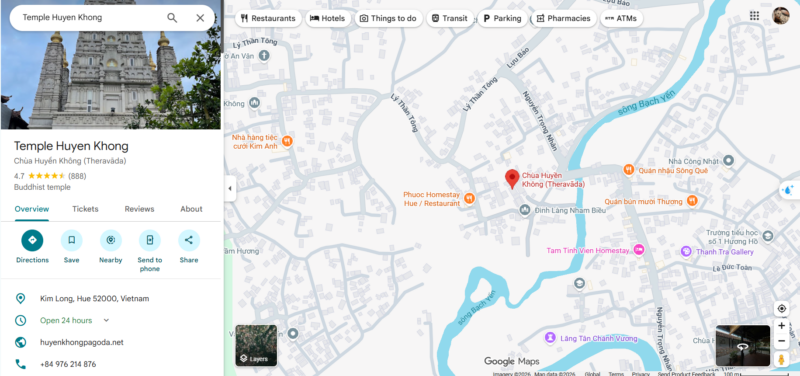
Address: Trieu Son Phuong, Huong Ho, Huong Tra
Distance: ~10 km from Hue city center
How to get there :
III. Architectural Highlights & Landscape Exploration
Huyen Khong Pagoda: A Synthesis of Asian Buddhist Art
Huyen Khong Pagoda stands out through a deliberate fusion of Indian Theravada grandeur, Japanese zen aesthetics, and traditional Hue imperial garden architecture.
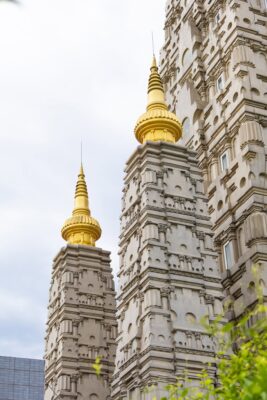
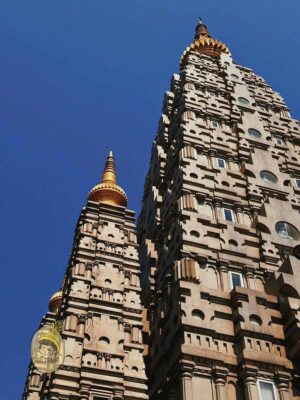
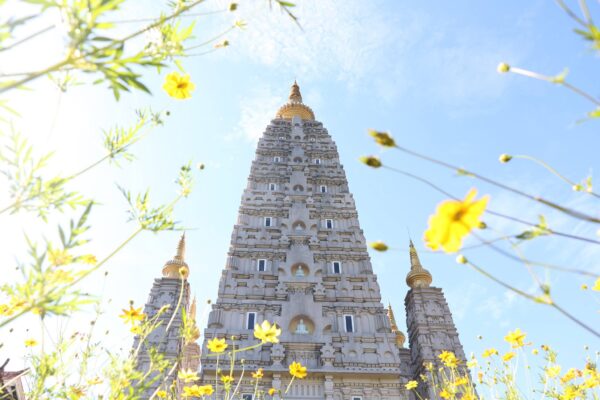
- Dai Giac Stupa (The Great Bodhi Stupa): The crown jewel of the complex, built as a scaled homage to the Mahabodhi Temple in Bodh Gaya, India. The stupa features an imposing golden spire rising above a stark white base, adorned with intricate floral and relief carvings. Inside the stupa chamber rests a serene Buddha statue surrounded by quiet circumambulation corridors designed for walking meditation (Vipassana).
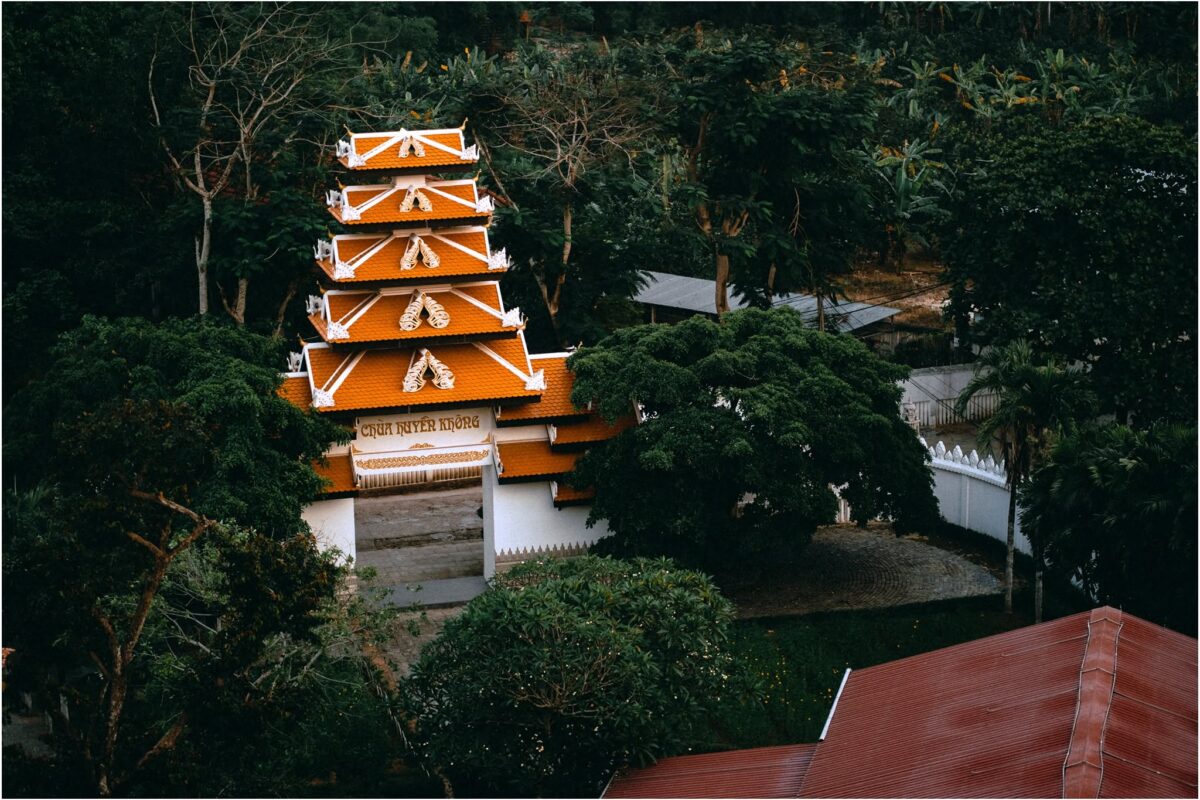
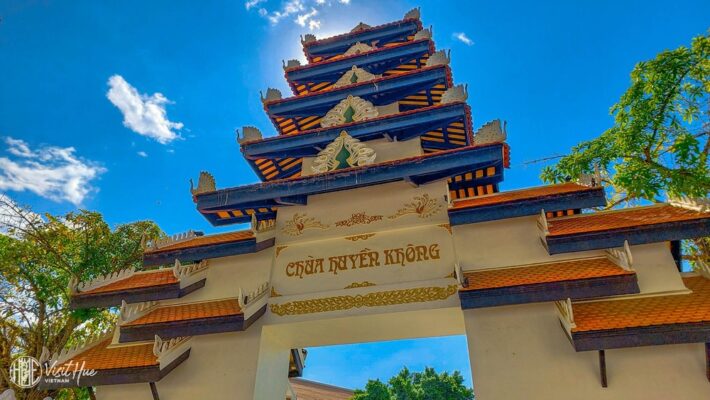
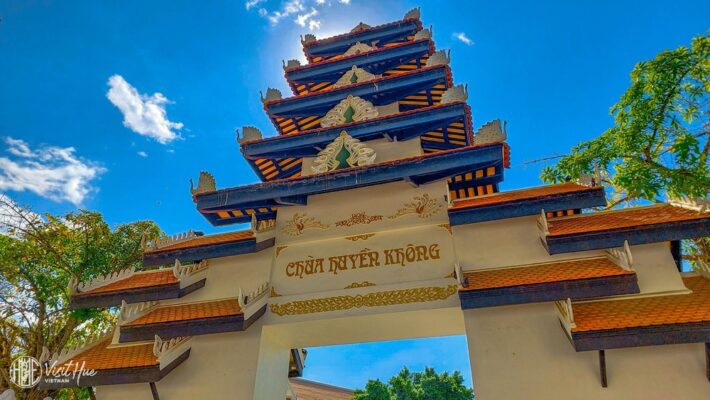
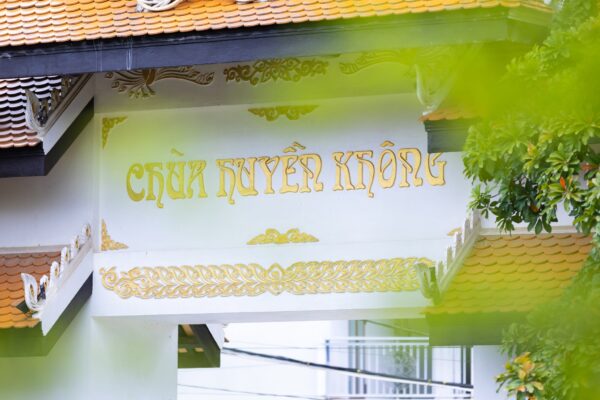
The Main Entrance Gate: is an unmistakable architectural landmark, standing approximately 15 meters high and spanning 13 meters wide. Built with an intricate system of multi-tiered overlapping tile roofs, the gate immediately commands attention with its warm terracotta palette and the grand calligraphic plaque bearing the name “Chùa Huyền Không“ prominently displayed at its center.
- Peacock Sculptures (Mayura): Gracefully perched along the roof ridges and corners are detailed sculptures of peacocks. In Theravada Buddhist iconography, the peacock symbolizes nobility, spiritual resilience, and the power to transmute negative defilements into pure awareness.
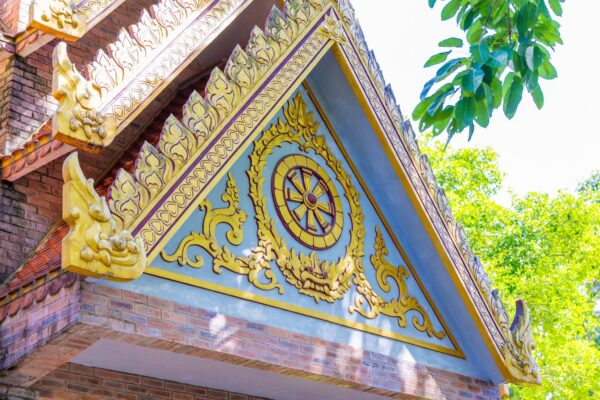
- Champa-Inspired Reliefs: Surrounding the pillars and base of the gate are delicate bas-relief carvings inspired by the sacred brick motifs of the My Son Sanctuary. This integration reflects the historical and spiritual dialogue between classical Champa art and local Vietnamese Buddhist culture.
- Eclectic Architectural Harmony: By seamlessly intertwining multi-tiered roofs, lotus carvings, sacred peacocks, and Cham reliefs, the gate avoids rigid adherence to a single traditional style. Instead, it serves as an expressive prologue to the diverse, syncretic visual language found throughout the entire temple grounds.
IV. Essential Travel Tips
- Best Time to Visit: Early morning between 7:00 AM and 9:00 AM for soft light, lingering mountain mist, and cool weather.
- Dress Code: Modest attire is strictly required. Cover shoulders and knees (long pants or maxi skirts). Avoid sleeveless tops or short skirts.
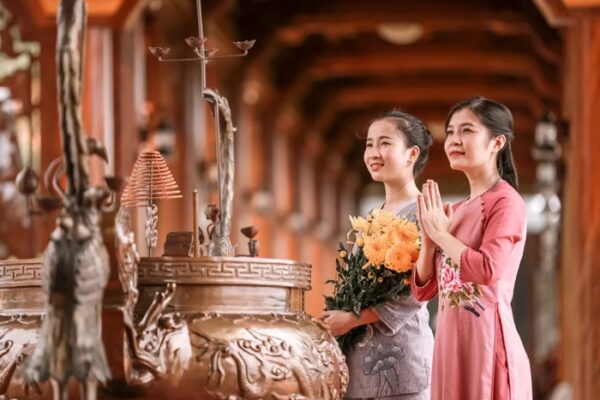
- Temple Etiquette: Keep voices low, remove shoes before entering prayer halls, and do not disrupt monks during walking meditation.
- Footwear & Essentials: Wear comfortable walking shoes or sneakers with good traction for the unpaved paths at Son Thuong, and bring mosquito repellent if spending time in the forested areas.
V. Some important notes when visiting Huyen Khong Pagoda
To have the most complete and meaningful trip when visiting or worshiping at Huyen Khong Pagoda, visitors should note the following:
- You should learn about the route before going to Huyen Khong Pagoda.
- Firmly grasp the Hue tourist map to be proactive in your journey;
- Huyen Khong Pagoda is a place of meditation, so you need to choose polite, discreet clothing and avoid making noise in a sacred place.
- Do not take any action that harms the landscape and temple space.
- You should go to the temple early in the morning to capture the magical scene.
Huyen Khong Pagoda is a peaceful pagoda with breathtakingly beautiful scenery. When coming here, you will immerse in the clear space, take a deep breath and look out into the distance to see everything. It all brings a sense of peace, escape, the cessation of time and allows people to slow down a bit.
Please immediately contact RESTOUR – a professional tour operator, to get an attractive schedule and useful information about other beautiful destinations. We will also accompany you on your journey to explore Hue City and bring you the most wonderful experiences.
VI.The RESTOUR Advantage:
Expert Care in Our Hometown
Navigating the complex history of the Nguyen Dynasty requires a partner with deep local soul. RESTOUR is a premier Vietnam Tour Operator providing seamless travel support across Vietnam, the Philippines, and Indonesia. Your private tour in our hometown includes:
Tailor-Made Flexibility: We build your Hue itinerary around your pace, ensuring you never feel rushed through history.
Private Tour (PVT) Comfort: Travel in modern, air-conditioned vehicles with professional drivers who know every scenic shortcut.
Expert Local Storytellers: Our English-speaking guides are Hue locals who provide the cultural context and emotional depth that guidebooks miss.
24/7 Local Support: Since our HQ is here, we are always just minutes away to ensure your 2026 adventure is perfect.
#restour #vietnamtouroperator #hue2026 #huyenkhongpagoda #privatetour #tailormadetravel #huecity
———————————————————————————————————————————————–
CONTACT US 🇻🇳 VIETNAM:
📱 Hotline: +84948641370
📍 Address: Lot M25, Dong Nam Thuy An New Urban Area, Thanh Thuy Ward, Hue city, Vietnam.
📧 Email: restour123@gmail.com
🇵🇭 PHILLIPINES:
📱 Hotline: +639706507222 (Ms. Vangie)
📍 Address: Unit No. 3E, Villafuerte Bldg., III 279, Alabang-Zapote Road, Pamplona, Las Pinas, Philippines.
📧 Email: php@res-tour.com
🇮🇩 INDONESIA:
📱 Hotline: +62 817244385 (Ms. Hanna)
📍 Address: Jl. Jangli Tlawah V / 39A Semarang, Central Java, Indonesia.
📧 Email: id.restour@gmail.com