
Vietnam Travel Guides
Visiting the Imperial City of Hue: Everything You Need to Know for First-Timers
Aug
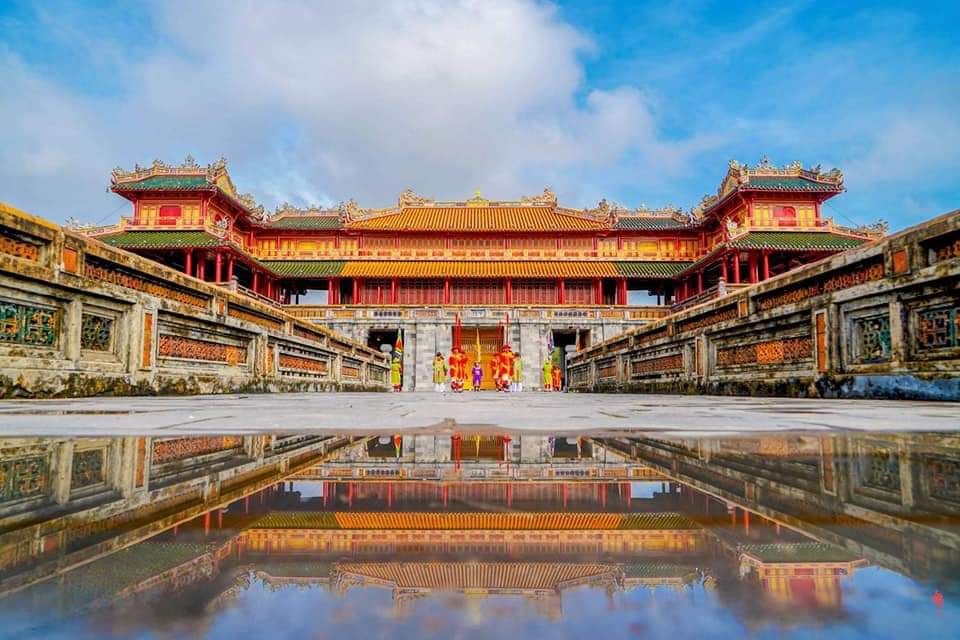
The Imperial City of Hue (Hoàng thành Huế) stands as the crown jewel of Vietnam’s royal past. Designated as a UNESCO World Heritage Site in 1993, this sprawling walled fortress along the Perfume River preserves the ceremonial, political, and private everyday lives of the Nguyen Dynasty-the last imperial dynasty of Vietnam.
Whether you are an avid history buff, a photographer seeking timeless architectural symmetry, or a first-time traveler mapping out your Central Vietnam itinerary, this complete, in-depth guide covers everything you need to navigate this magnificent heritage complex.
I.Where Are the Citadel and the Imperial City of Hue Located?
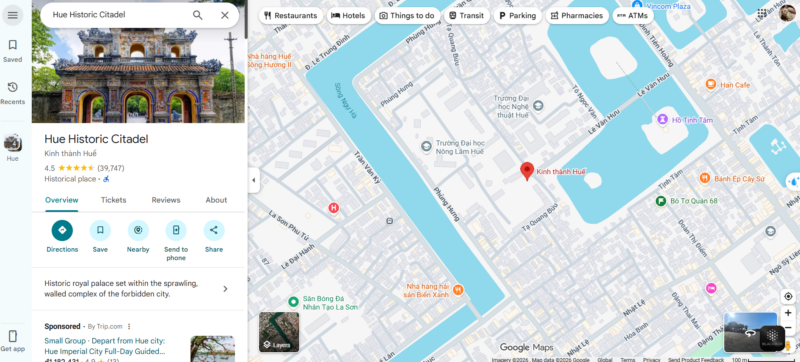
Situated on the northern bank of the Perfume River (Sông Hương) in the heart of Hue City, the site is designed as a system of three nested concentric enclosures:
- The Capital City (Kinh Thành / Hue Citadel): The outermost defensive perimeter stretching nearly 10 kilometers in circumference,protected by 10 fortified gates, moats, and bastions. Today, this outer area encompasses residential neighborhoods, tree-lined boulevards, and historical monuments.
- The Imperial City (Hoàng Thành): The second, inner fortified perimeter accessed primarily through the monumental Ngo Mon Gate (Meridian Gate). This zone historically housed central administrative ministries, state shrines, and ceremonial gathering squares.
- The Forbidden Purple City (Tử Cấm Thành): The innermost, highly secluded sanctum reserved exclusively for the Emperor, the Queen Mothers, royal consorts, and eunuchs.
II.The History & Architecture of the Royal Complex
The Dynastic Foundation
Construction began in 1804 under Emperor Gia Long, the founding monarch of the Nguyen Dynasty, and reached full completion in 1833 under his successor, Emperor Minh Mang. The construction required tens of thousands of conscripted laborers and soldiers to dig extensive canal systems, build earthworks, and construct hundreds of palaces, pavilions, and administrative halls.
The Architectural Blend
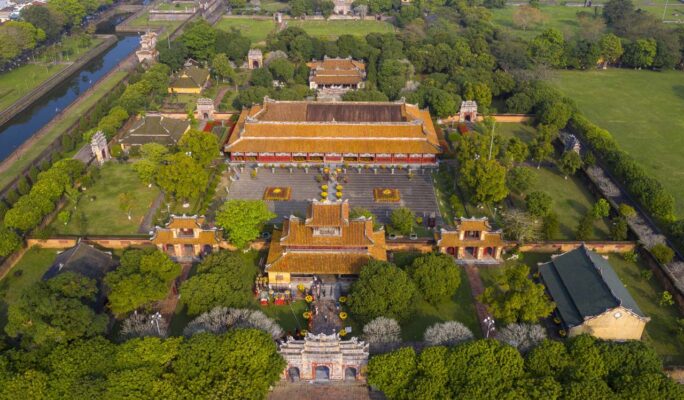
The entire compound is a masterclass in ancient oriental geomancy (Feng Shui). The complex faces south toward the Ngu Binh Mountain (Front Screen) and is flanked by two river islets-the Left Blue Dragon (Con Hen) and the Right White Tiger (Con Da Vien)-to channel auspicious energy (Qi).
Architecturally, the Imperial City synthesizes three major influences:
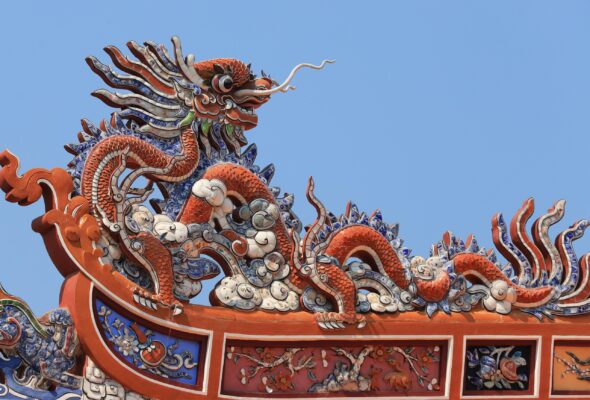
- Traditional Vietnamese imperial aesthetics: Low-rise wooden structures, double-layered tiled roofs (mái chồng diêm), and intricate dragon-and-cloud motifs.
- Classical East Asian palace layout: Strict cardinal alignment and concentric defensive walls reminiscent of Beijing’s Forbidden City.
- French Vauban military fortification: Geometric stone bastions, defensive moats, and outer earthworks designed with Western military engineering principles.
War, Destruction, and Modern Restoration
During the 20th century, the complex suffered catastrophic structural losses during the French Indochina War and the 1968 Battle of Hue. Out of approximately 160 original buildings, fewer than 30 remained standing after decades of conflict.
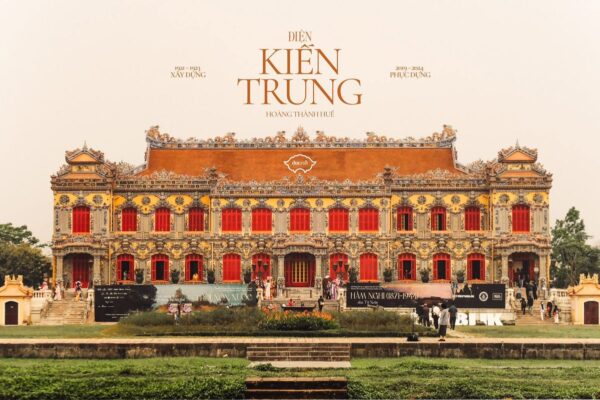
In recent decades, extensive restoration projects led by the Hue Monuments Conservation Centre (HMCC) in collaboration with international UNESCO experts have meticulously revived key heritage structures-most notably the full reconstruction of Kien Trung Palace and the restoration of Thai Hoa Palace.
Hue Imperial City: Essential Visitor Guide
| Visitor Detail | Information & Specifics |
| Exact Address | 23/8 Street, Thuan Thanh Ward, Hue City, Thua Thien Hue |
| Opening Hours | Summer: 6:30 AM – 5:30 PM | Winter: 7:00 AM – 5:00 PM (Daily) |
| Standard Admission | Adults: 200,000 VND (~$8.00 USD) | Children (7–12 yrs): 40,000 VND |
| Heritage Combo Pass | 420,000 VND (Includes Imperial City + Minh Mang, Tu Duc, & Khai Dinh Tombs; valid for 2 days) |
| Recommended Duration | 3.0 to 4.5 hours for a comprehensive walking visit |
| Best Months to Visit | January to April (dry, mild weather with pleasant temperatures) |
Guided Walking Tours & Audio Solutions
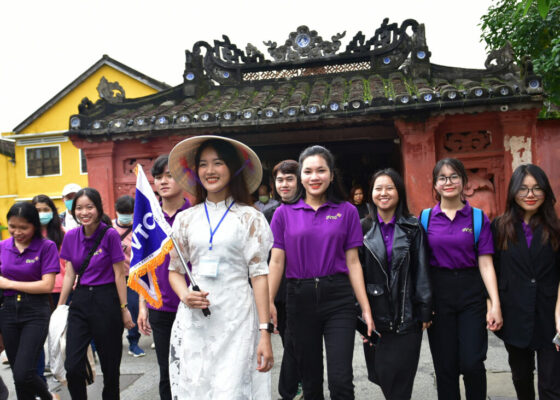
- On-Site Licensed Guides: Local English, French, and Vietnamese-speaking guides can be hired directly at the main ticket counter inside the Ngo Mon courtyard. A standard 2-hour private tour ranges from 300,000 to 500,000 VND and provides essential historical context that is not fully explained on informational plaques.
- Digital Audio Wand Guides: Multi-language electronic audio headsets and QR-code app-based guides are available for rent near the entrance for 50,000 to 100,000 VND.
Dress Code & Cultural Etiquette
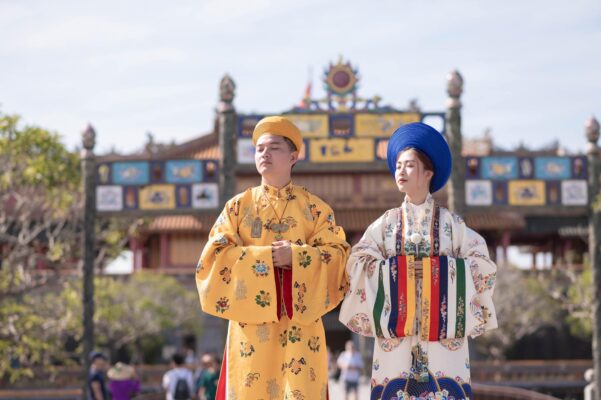
Because the Imperial City contains active ancestral temples and consecrated royal shrines, strict cultural decorum is required:
- Attire Requirements: Shoulders and knees must be fully covered. Avoid low-cut tops, sleeveless shirts, short skirts, or beachwear.
- Footwear and Headwear: Remove hats, sunglasses, and umbrellas before stepping into interior altars (such as The Mieu or Hung Mieu).
- Behavior: Maintain a respectful volume. Do not sit on stone balustrades, lean against carved wooden pillars, or touch restored royal artifacts and thrones.
Accessibility & Getting Around
- Paving & Terrain: The main central axis courtyards are flat and paved with traditional Bat Trang bricks and stone slabs.
- Step Barriers: Most traditional palaces feature raised stone thresholds (ngưỡng cửa) designed to block bad spirits; these can present minor obstacles for standard wheelchairs and strollers. However, ramps have been integrated along major outer access corridors.
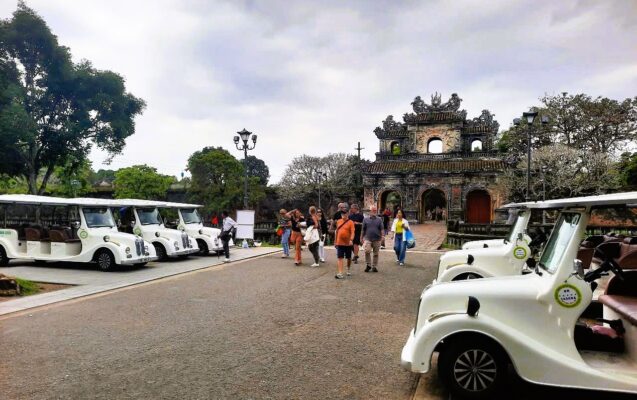
- Electric Shuttles: Electric golf-cart shuttles (xe điện) operate inside the grounds, offering hop-on hop-off transfers between key clusters for visitors with reduced mobility.
Must-See Sights Inside the Complex
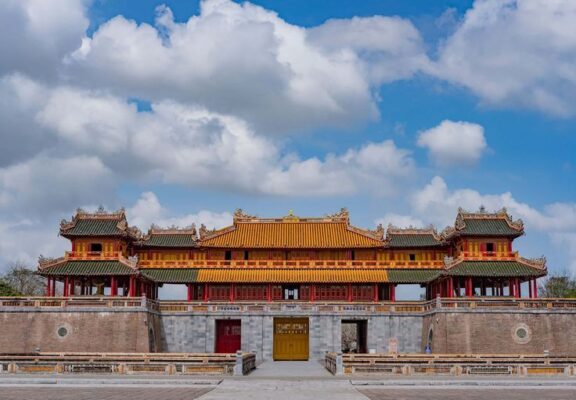
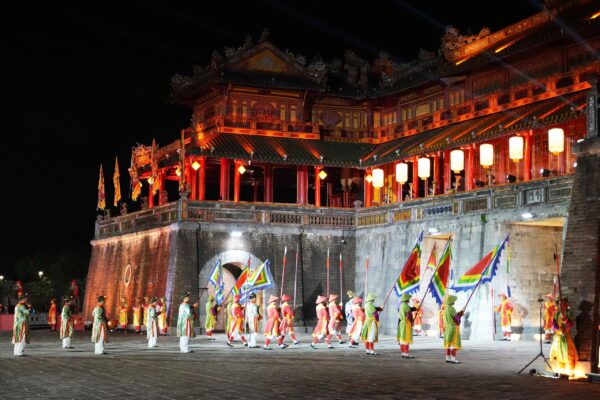
- Ngo Mon Gate (Meridian Gate): The grand southern ceremonial entrance featuring a U-shaped stone fortress foundation with five entryways (the central gate was reserved strictly for the Emperor) topped by the Five Phoenix Pavilion (Lầu Ngũ Phụng).
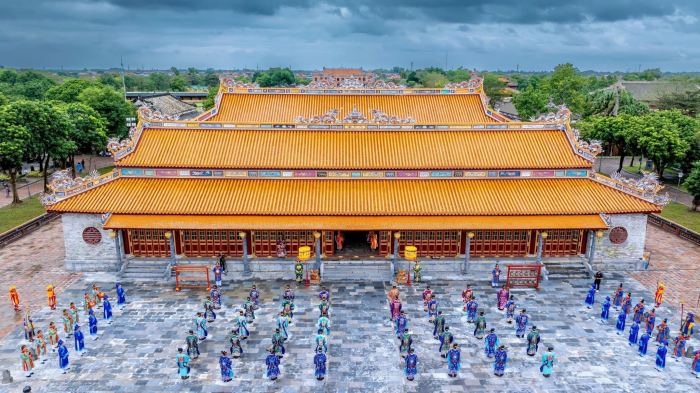
- Thai Hoa Palace (Palace of Supreme Harmony): The epicenter of royal power, supported by 80 deeply carved, red-lacquered ironwood pillars. This grand hall housed the Emperor’s gilded dragon throne for coronations, royal birthdays, and major state ceremonies.
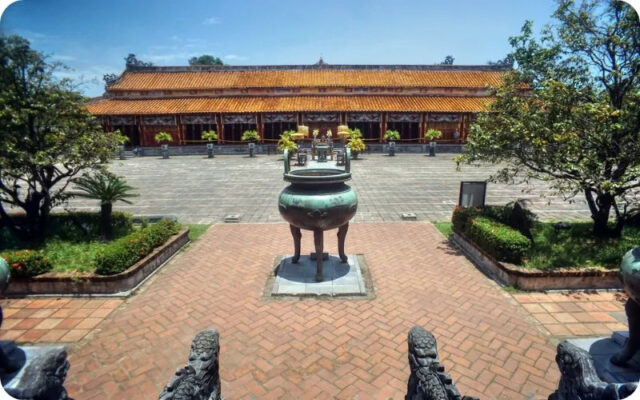
- The Mieu Temple Complex: The imperial ancestral shrine honoring the deceased Nguyen monarchs. Directly across the stone courtyard sit the Nine Dynastic Urns (Cửu Đỉnh), cast in bronze between 1835 and 1837, each weighing between 1.9 and 2.6 tons and intricately carved with flora, fauna, and topography of Vietnam.
- Kien Trung Palace: Built in 1923 during the reign of Emperor Khai Dinh, this palace exemplifies a distinct Indochinese-European hybrid style, combining French Renaissance exterior architecture, Italian balconies, and vibrant traditional Vietnamese porcelain mosaic artwork (khảm sành sứ).
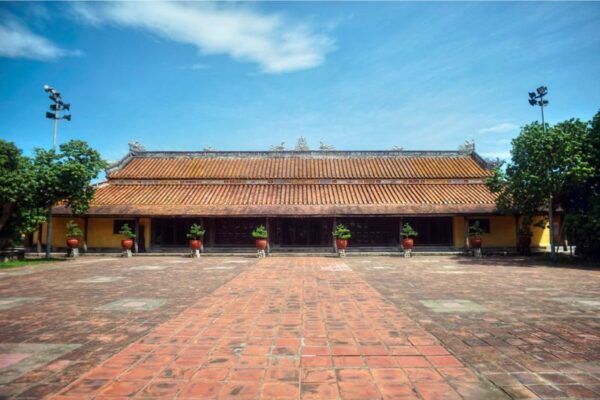
- Dien Tho & Truong Sanh Palaces: The private residential complexes built for the Queen Mothers, complete with shaded lotus ponds, ornate rockeries, reading pavilions, and serene walled garden paths.
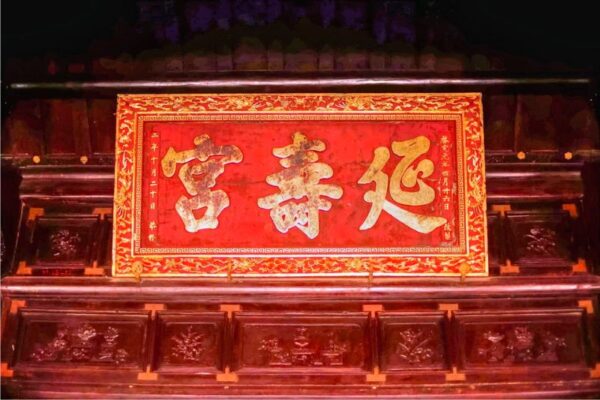
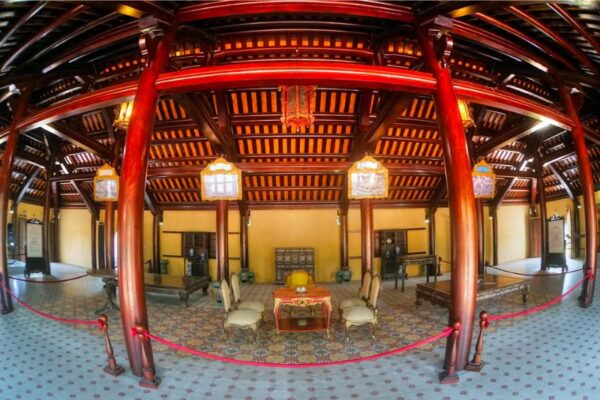
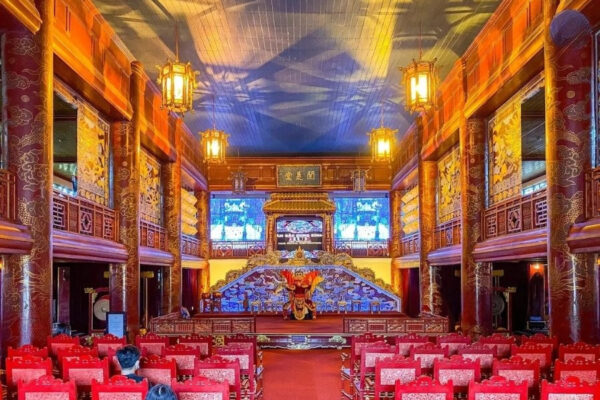
- Duyet Thi Duong (Royal National Theater): The oldest surviving traditional theater in Vietnam, originally built in 1826 so the royal court could enjoy classical court opera (Hát Bội) and imperial music.
Festivals & Cultural Celebrations
- Hue Festival (Biennial): A major international cultural event held every two years, featuring live reenactments of ancient court rituals (such as the Nam Giao Offering and the Imperial Changing of the Guard), illuminated night spectacles, and traditional art performances across the Citadel grounds.
- Hue Traditional Craft Festival: An annual or biennial celebration highlighting Central Vietnamese artisanal heritages, including royal bronze casting, Hue conical hat (nón lá) making, paper flower crafting, and embroidery.
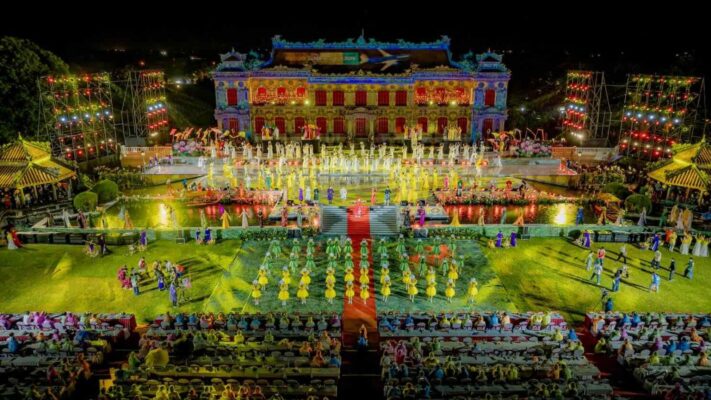
- Royal Changing of the Guard Reenactment: Staged daily or during weekend peak seasons in front of the Ngo Mon Gate, complete with period-accurate royal uniforms, bronze gongs, and traditional court banners.
Practical Tips for First-Time Visitors
- Beat the Midday Sun: Hue’s summer heat (May through August) is intense and humid. Begin your tour right at opening time (6:30–7:30 AM) or visit in the late afternoon (3:30–5:30 PM).
- Hydration & Sun Protection: There is minimal shade across the massive stone courtyards. Bring a wide-brimmed hat, sunglasses, sunscreen, and a refillable water bottle.
- Footwear Choice: The grounds span more than 500 hectares. Wear broken-in walking shoes or cushioned sneakers, as a standard visit requires walking 4 to 7 kilometers.
- Photography Advice: Late afternoon golden hour casts a warm light against the yellow stucco walls, mossy brickwork, and reflective ponds. The corridor outside the Queen Mother’s residence (Dien Tho Palace) offers classic framing for portrait and architectural shots.
5. The RESTOUR Advantage: Expert Care in Our Hometown
Navigating the complex history of the Nguyen Dynasty requires a partner with deep local soul. RESTOUR is a premier Vietnam Tour Operator providing seamless travel support across Vietnam, the Philippines, and Indonesia. Your private tour in our hometown includes:
- Tailor-Made Flexibility: We build your Hue itinerary around your pace, ensuring you never feel rushed through history.
- Private Tour (PVT) Comfort: Travel in modern, air-conditioned vehicles with professional drivers who know every scenic shortcut.
- Expert Local Storytellers: Our English-speaking guides are Hue locals who provide the cultural context and emotional depth that guidebooks miss.
- 24/7 Local Support: Since our HQ is here, we are always just minutes away to ensure your 2026 adventure is perfect.
#restour #vietnamtouroperator #hue2026 #imperialcity #privatetour #tailormadetravel #huecity
CONTACT US
🇻🇳 VIETNAM (Headquarters):
📱 Hotline: +84948641370
📍 Address: Lot M25, Dong Nam Thuy An New Urban Area, Thanh Thuy Ward, Hue city, Vietnam.
📧 Email: restour123@gmail.com
🇵🇭 PHILIPPINES:
📱 Hotline: +639706507222 (Ms. Vangie)
📍 Address: Unit No. 3E, Villafuerte Bldg., III 279, Alabang-Zapote Road, Pamplona, Las Pinas, Philippines.
📧 Email: php@res-tour.com
🇮🇩 INDONESIA:
📱 Hotline: +62 817244385 (Ms. Hanna)
📍 Address: Jl. Jangli Tlawah V / 39A Semarang, Central Java, Indonesia.
📧 Email: id.restour@gmail.com